
I once read that writer-director Joel Coen said “Every movie is an attempt to remake The Wizard of Oz”. Though I no longer recall the context of what prompted his remark, I can only speculate that he was referring to the cinematic experience that The Wizard of Oz (1939) created. Perhaps it was the familiar shape of Dorothy’s whimsical Hero’s Journey, or how the film introduced audiences to a brand-new way of appreciating the filmic medium in all its colourful glory.
But what about the literal attempts to remake The Wizard of Oz?
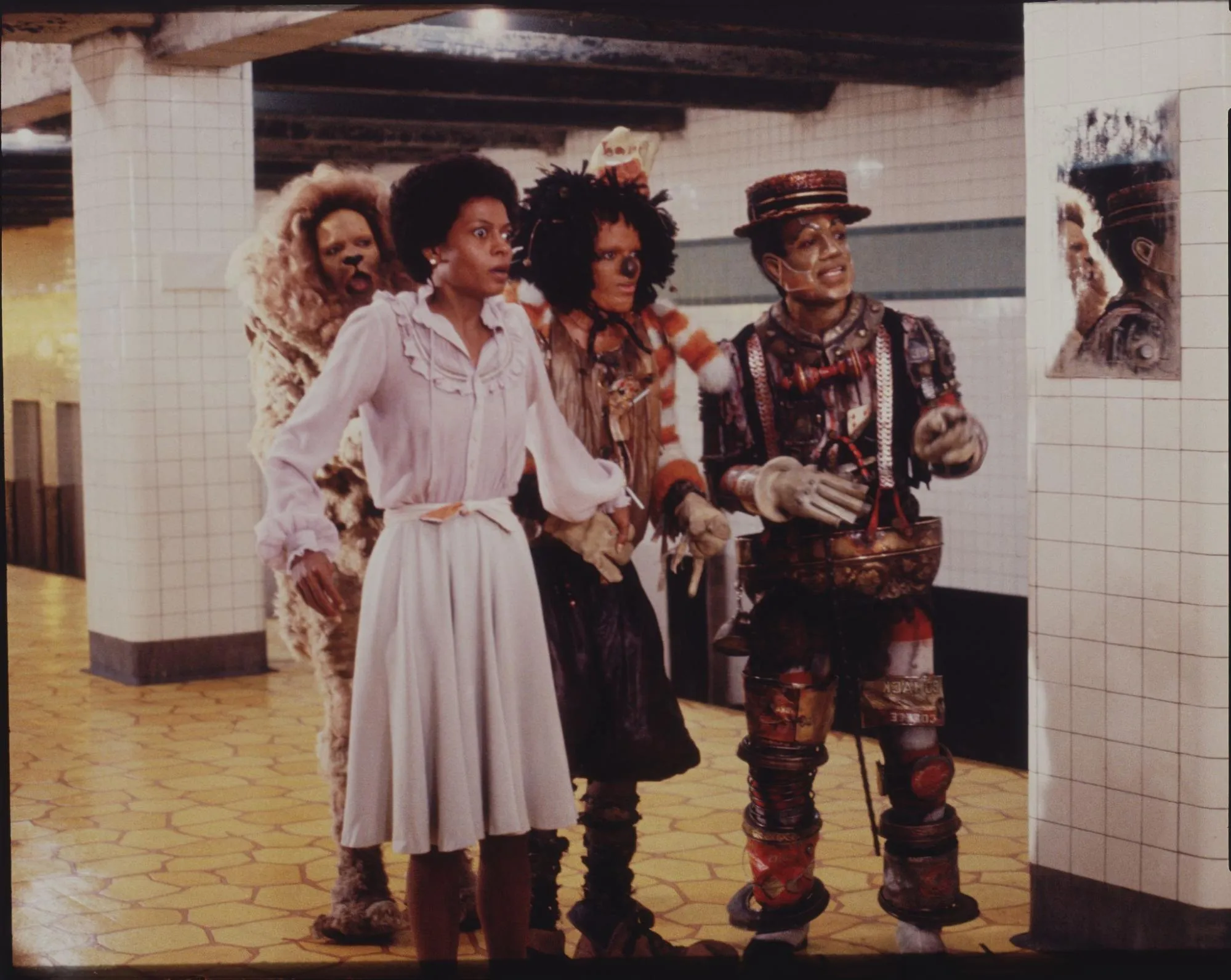
The Wiz (1978) comes from a celebrated lineage of stories set in the world of Oz. It is a bold reimagination of both L. Frank Baum’s beloved novel The Wonderful Wizard of Oz (1900), Victor Fleming’s classic 1939 Hollywood film, and also an adaptation of the 1975 Tony Award-winning musical The Wiz. Directed by Hollywood icon Sidney Lumet, the film features music legends Diana Ross, Michael Jackson, Lena Horne, comedy greats Richard Pryor and Nipsey Rusell, and Mabel King, who reprised her role from the stage production.
As a reframing of the classic tale into an African-American cultural context, The Wiz introduces intersectionality and social commentary into the familiar fantasy film. While audiences who have seen Fleming’s The Wizard of Oz will never forget the moment its sepia tone bursts into the vibrant Technicolour landscape of Oz, The Wiz takes advantage of the already colour-saturated era of the ‘70s to pay homage to the very moment of watching our screens glow in rainbow hues. It instead amplifies our sense of awe through rich and colourful set designs, dazzling costumes and radiant music numbers.
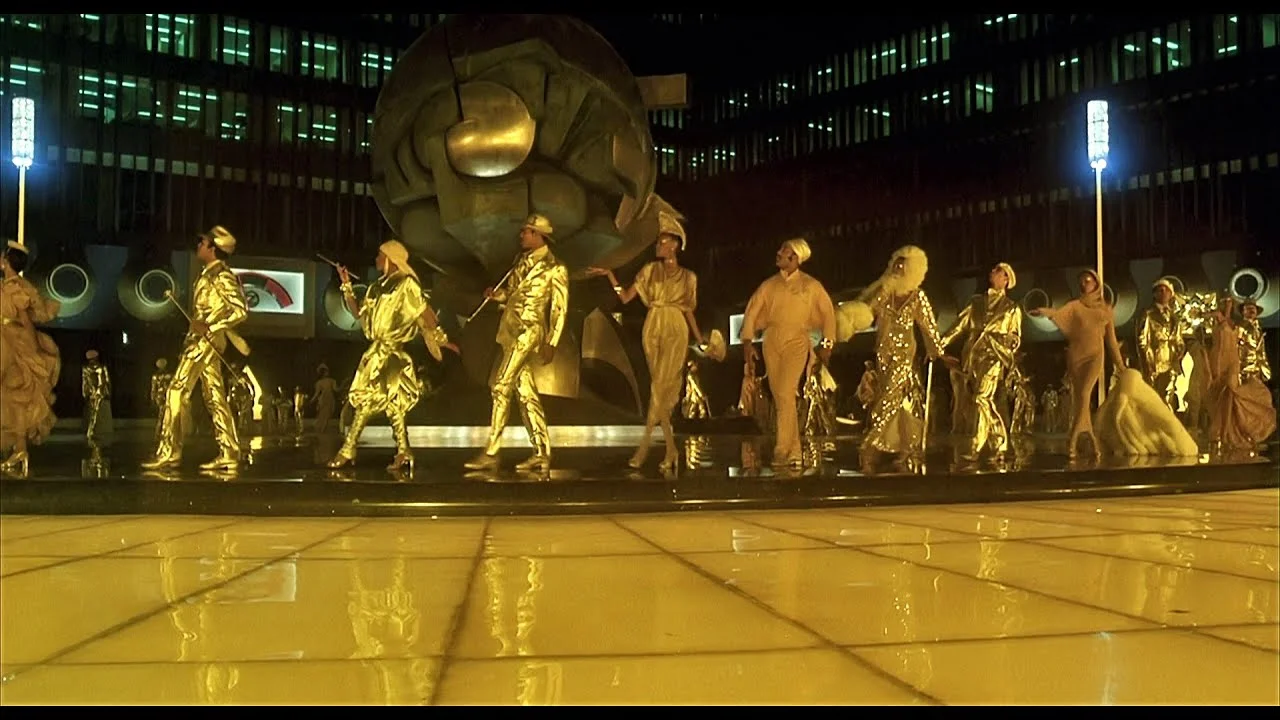
In Lumet’s version, Dorothy (played by Diana Ross) is no longer a young farm girl from Kansas, but a 24-year-old kindergarten teacher, whose journey takes her from Harlem, New York, into the futuristic Oz, resembling a dystopian landscape of New York City. The pastoral landscape of Fleming’s Oz, is replaced with brutalist, post-modernist architecture, and a concrete sprawl of skyscrapers that continue to dominate its landscape today. With the injection of contemporary urban landscapes within its new context, The Wiz’s distinct style of Afrofuturism ultimately transforms The Wizard of Oz into a celebration of Black excellence and liberation, while also centring its story on historical and contemporary tensions of the African-American diaspora in ‘70s America.
Released almost 40 years after the original film, The Wiz arrived in post-Hays Code Hollywood, an era that embraced new freedoms, and moved away from family-oriented, romanticised values that thrived during the heyday of the Golden Age of Hollywood. With counterculture movements and new music genres reshaping the art scene, The Wiz, like many other musicals of the time (The Rocky Horror Picture Show (1975), Jesus Christ Superstar (1973), etc.) created a new sonic identity that infused genres of rock, soul, funk, R&B with classical Broadway melodies. Composed by the incomparable Quincy Jones and entrusted into the hands of musical powerhouses of the time, its musical sequences shine with energy through its upbeat tunes and theatricality while grounding its tale in the grittiness of urban life. In doing so, it reinvigorated its story for a new audience and amplified voices of the historically overlooked community in Hollywood, all while retaining the essence of what made its original beloved among many.
The film teeters between whimsical and campy, and to some, might veer towards horror, creating tonal shifts that might surprise some viewers. However, the film does its best to immerse us into this new Oz, with sequences that allow us to reexperience its land for the first time. The richness of the film, hence, lies in how it refuses to settle neatly within pre-established genres, instead embracing a new cultural hybridity that serves to both reinvent and honour its past adaptations.
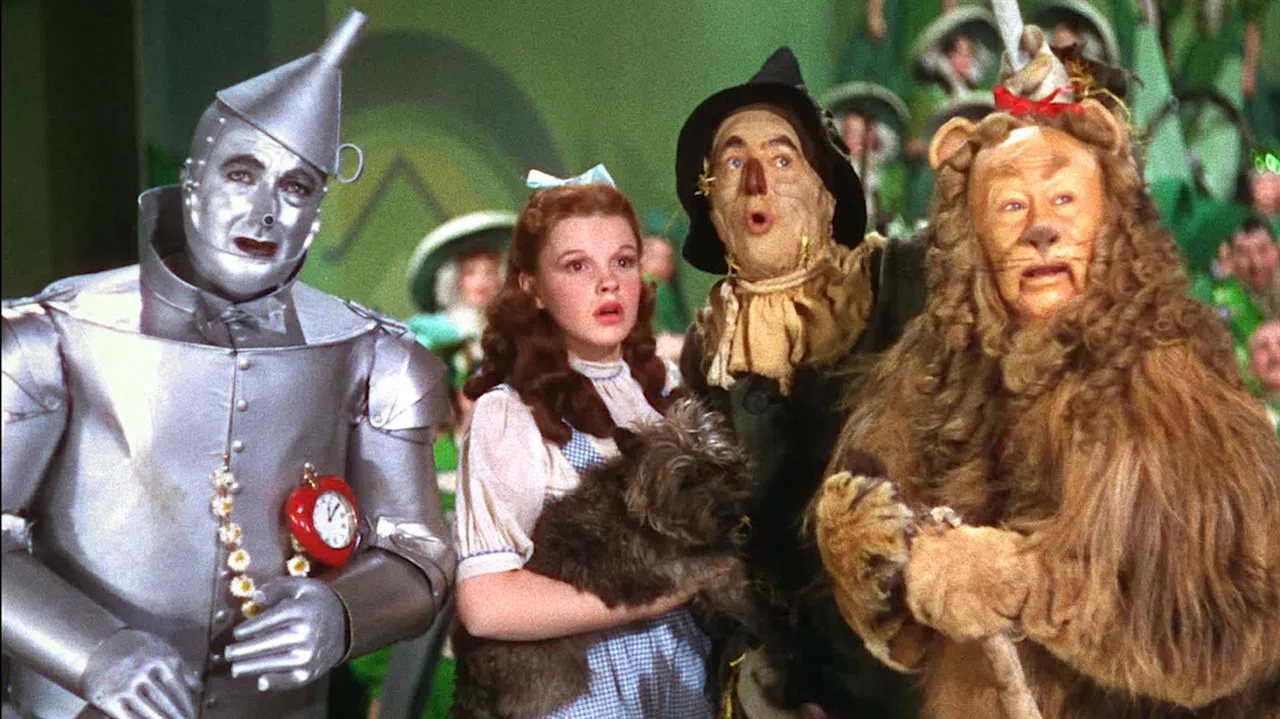
The Wiz has a lot to live up to, considering how revered and transformative the original film was. It is easy for a first-time viewer to approach it expecting either a faithful echo of the original or comparing it with other reinterpretations, like Wicked (2024). However, this means risking what it uniquely achieves. My advice would be suspending these expectations to anticipate something new and allow it to stand on its own terms: a film that maintains fidelity to its original source, creatively tackling the disillusionment of the contemporary times, while still reaffirming the need for optimism, friendship, courage, and adventure.
The Wiz would, of course, not be possible without Baum’s original novel. One of my favourite facts about Baum’s novel was how it invited many to interpret it as an allegory for America’s political and economic landscape in the 1900s. One could never expect how its motley crew of a Tin Man, Lion, Scarecrow and a farm girl following a yellow brick road to the glimmering Emerald City could become metaphors for populism and power. In this seemingly innocuous fantasy, it is interesting to see how the pliable landscape of Oz can become a canvas for resistance, subversion of political power and cultural reflection. The Wiz thus becomes part of this ongoing tradition of modern interpretations like Wicked (2024) and Oz: The Great and Powerful (2013), where these stories become an examination of identity and belonging in ways unexplored by the original.
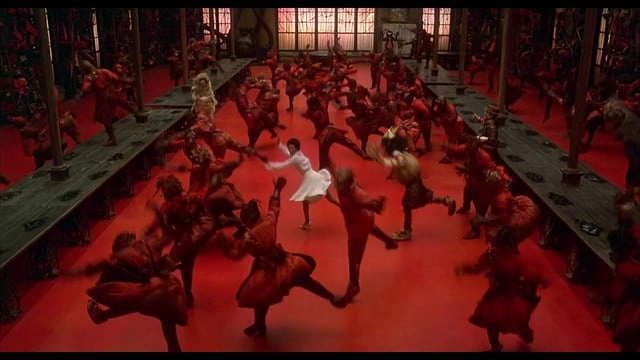
Every adaptation of The Wonderful Wizard of Oz (1900) has used its spaces and characters to be part of a larger reflection of the era-specific anxieties and aspirations. The timelessness of Baum’s novel therefore lies not in fixing Oz as an unchanging world, but in its adaptability; The Wiz (1978) acts as a reminder of this notion in how it seeks to reintroduce this story into a new era and cultural landscape, a tradition that lives through every adaptation.
Recalling Joel Coen’s words in this light, I’d like to contest his notion and state that cinema is not just an attempt to “remake” The Wizard of Oz, but rather a test of its ability to reinvent its traditions for a new age where genre, style and conventions are reshaped for the modern audience. Remake or not, what we do know, however, is that every film beats with the same pulse and that is, to take us on a journey that offers us new ways of seeing and believing, while reminding us that reality and fantasy are never too far apart.
About the Author
Mavis is a budding film writer, with a Communications and New Media degree from NUS. Previously part of *SCAPE’s Film Critics Lab programme, she has also written several film reviews for Singapore Film Society, including one on Wicked (2024).