
Juxtaposing the rise and fall of two Beijing opera actors against China’s tumultuous 20th century, Farewell My Concubine (1993, Chen Kaige) is one of the most prominent queer Sinophone films, intensified with the iconic Leslie Cheung in the lead role. After his untimely passing ten years later and his own status as a queer man, Dieyi has become one of Cheung’s definitive performances.
Farewell My Concubine’s legacy is perhaps best exemplified through its transnational influence across queer Asian media. Through this piece I want to show how different works across Asia use traditional performing arts to comment on gender performance and the tension between tradition and modernity.
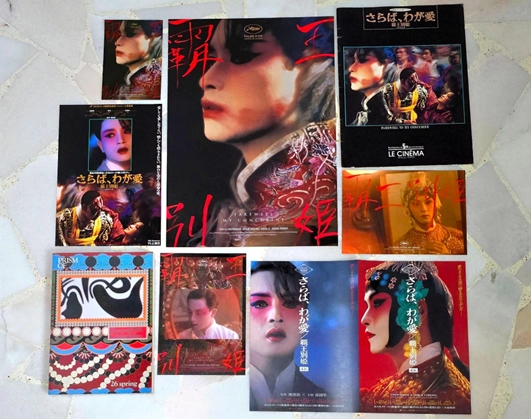
My collection of memorabilia of Farewell My Concubine from South Korea and Japan.
Posters from South Korea designed by Propaganda Design Studio.
Spiritual Descendants
This first section is about two films I consider to be the most spiritually faithful to Farewell My Concubine.
The King & the Clown (2005, Lee Joon-ik, South Korea)
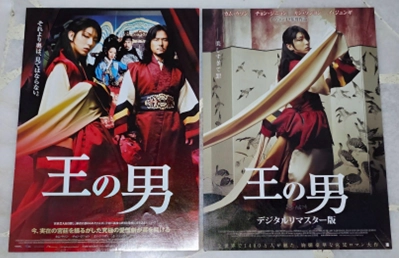
My Japanese mini posters of The King & the Clown
The King & the Clown takes place in late 15th century Joseon-era Korea, during the tyrannical reign of King Yeonsan (Jung Jin-young). Lee Joon-gi plays the androgynous Gong-gil, a street clown specialising in female roles, contrasting with the traditional masculinity of Jangsaeng (Kam Woo-Sung). Their entertainer troupe gets thrust into the imperial palace where Yeonsan becomes infatuated with Gong-gil, earning the ire of the royal court. What makes the film captivating is the devotion shown in the central relationship between Jangsaeng and Gong-gil. The film was a surprise critical and commercial hit in its home country of South Korea, especially as a sageuk (historical drama) centring on the traditional performing arts with a homosexual love triangle, when the trend in Korean cinema at that time was either action films or romantic melodramas. Its success shows how audiences have an appetite for alternative forms of masculinity and representations in romantic media.
Song Lang (2018, Leon Le, Vietnam)
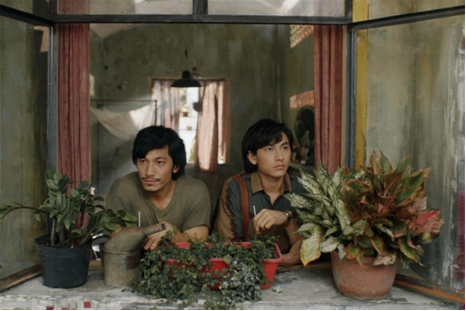
In 1980s Saigon, a struggling cải lương troupe’s leading actor Linh Phung (Viet popstar Isaac), and gangster Dung (Liên Bỉnh Phát) form an unlikely bond. Cải lương is a form of Vietnamese modern folk opera. According to director Leon Le, the title of the film has a double meaning, “it’s the name of the percussion instrument that sets the tempo of the music, representing the rhythm of life, [guiding] the artists… The title is also a play on words, literally meaning “two” (song) “men” (lang).” The film is a tribute to cải lương and a bygone era of Vietnam, with its faithful recreation of the music and stage productions. The relationship between the two men is deliberately subtle according to Le’s wishes: “I wanted to see if I could engage the audience in the gay love story without even a slightest hint of those sexual elements.”¹
Reclaiming the body and challenging the status quo
This section looks at two works where artistic bodies act as sites of history and memory but also challenge the tradition of queer suffering.
Memories of My Body (2018, Indonesia, Garin Nugroho)
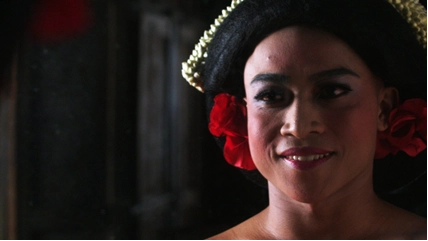
The body becomes a vessel for not only personal, but also political struggle in Indonesian director Garin Nugroho’s film Memories of My Body (2018). The film is inspired by the life of dancer Rianto (now based in Japan) who specialises in lengger, a traditional form of Indonesian dance originating from the island of Java, where the dances are performed by men who take on the roles traditionally reserved for women², subverting conventional gender roles. Juno, an aspiring lengger dancer learns from childhood that any exploration of his body and sexuality that deviates from gender norms is met with violence. His struggles also allude to Indonesia’s own troubled history, with the film’s reference to the 1965 genocide and the final act set in the 1990s, during the fall of Suharto’s authoritarian regime. But through dance, Juno reclaims his trauma, and as the cinematic avatar for Rianto, his body carries the real histories and memories of all those who have come before.
Winter Begonia (2020, Hui Kai Dong, China)
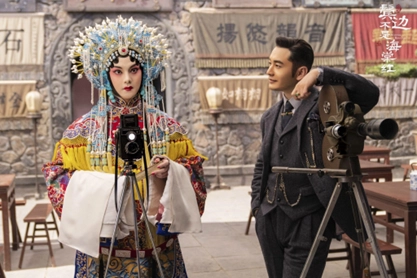
Winter Begonia (2020) embraced its similarities to Farewell and subsequently set itself apart. The Chinese drama is based on the danmei (a genre of Chinese media featuring homoerotic relationships between men) web novel of the same name. Set in 1930s Beijing, Shang Xirui (Yin Zheng) is a brilliant Beijing opera dan performer (specialising in female roles) while Cheng Fengtai (Huang Xiaoming) is a businessman with little interest in the arts. Despite being from wildly different backgrounds, the two men develop a close bond and symbolise how tradition and modernity can coexist. Shang experiments with his performances which incites backlash from purists. He creates a new opera based on Zhao Feiyan, one of the Four Great Beauties as a way to attract new audiences. Cheng recognises the cultural value of the opera and is able to recognise that this art form needs preservation, using a film camera to document Shang’s performances for future generations. Where Farewell is relentless despite its beauty, Winter Begonia is hopeful despite the bleak threat of the Japanese Occupation.
Breaking with Tradition
This final section features two animated works about traditional Japanese performing arts. Through the medium of animation they experiment with style and structure to showcase their traditional artform in a fresh and exciting way.
Showa Genroku Rakugo Shinju (2016-2017, Shinichi Omata, Japan)
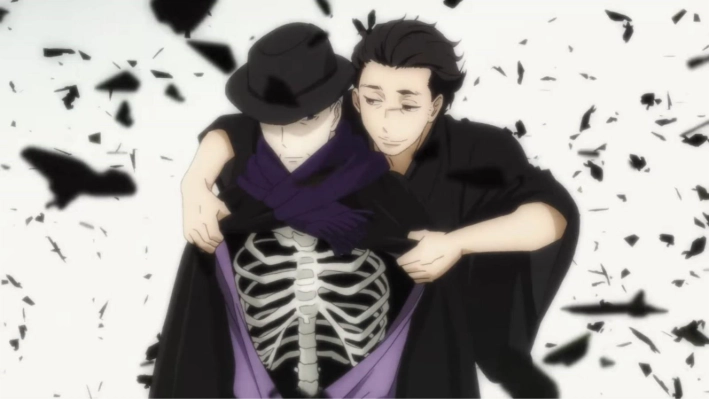
Descending Stories: Showa Genroku Rakugo Shinju (2016-2017) is an anime series based on the manga by Haruko Kumota, a mangaka known for her Boys’ Love (BL) works. Set in the world of rakugo, a traditional form of Japanese verbal storytelling where a lone performer sits on stage to tell comic stories, it centres around the Eighth Generation Yakumo Yurakutei, known for female impersonation. The mysterious deaths of his best friend Sukeroku and wife Mikiyochi plunges us into a flashback narrative of Yakumo’s past. The latter part of the series focuses on bringing rakugo into a new era. Yakumo is resigned to letting rakugo die out without Sukeroku by his side while Sukeroku’s daughter Konatsu resents Yakumo for never letting her perform rakugo (rakugo is a historically patriarchal art form). It is through Yotaro, an ex-con that wants to become Yakumo’s apprentice that both characters find a way forward: Yakumo takes him on and opens up to the idea of Konatsu performing. Yotaro and Konatsu represent the future of rakugo as an underdog and a woman with ideas to modernise the art form.
Inu-Oh (2021, Masaaki Yuasa, Japan)
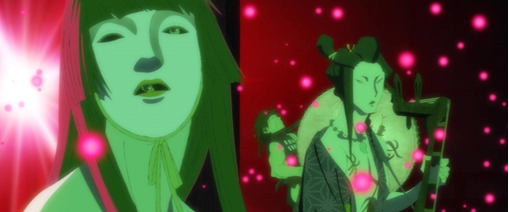
Masaaki Yuasa’s Inu-Oh (2021) is a daring adaptation of Hideo Furukawa’s novel Tales of the Heike: Inu-Oh. In the Muromachi period, blind biwa player (a Japanese short-necked wooden lute) Tomona and deformed Noh performer (traditional form of Japanese masked theatre) Inu-Oh learn that they can hear the spirits of the fallen Heike clan. They team up to tell these forgotten stories through music. As they rise to fame, Yuasa transforms the pair into glam rock stars, accompanied with a matching soundtrack. In his film, Yuasa “hoped to convey the existence of the marginalised, whose stories have been flattened or erased in the telling of history”³. Inu-Oh’s Japanese voice actor is Avu-chan, the non-binary lead singer of the band QUEEN BEE, and both Tomona and Inu-Oh are genderfluid-coded, with their theatrical style from clothing, makeup and hair clearly influenced by gender non-conforming icons such as Freddie Mercury and David Bowie.
The Future
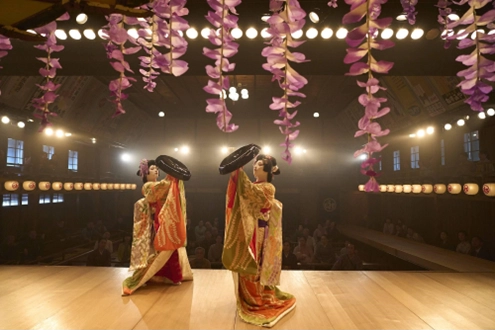
I will always be drawn to works that connect to Farewell My Concubine. This year, there will be another work to add to my list: Kokuho (2025, Lee Sang-il, Japan). Set in the world of kabuki, Kikuo (Ryo Yoshizawa), is taken in by a kabuki master (Ken Watanabe) after his yakuza father is killed, and raised alongside Shunsuke (Ryusei Yokohama), the master’s son and heir, training together as onnagata (male kabuki performers who play women’s roles). As of writing, it is the second highest live action grossing film of all-time in Japan, a surprise hit for a three-hour-long film about kabuki. “Tradition cannot be frozen in time, but it can be reinterpreted, reframed, and passed on like a story. The process may be imperfect, even
painful, but it is also essential,” says Director Lee. This sentiment ties in with my interest in how many of these traditional performing arts deal with gender performance, yet much of society fails to see the need to challenge gender expression outside the stage. It is my hope that through cinema, others will be curious to learn more about the cultures presented and question dominant ideologies of gender and sexuality, especially with the widespread hostility towards queer and most notably transgender individuals.
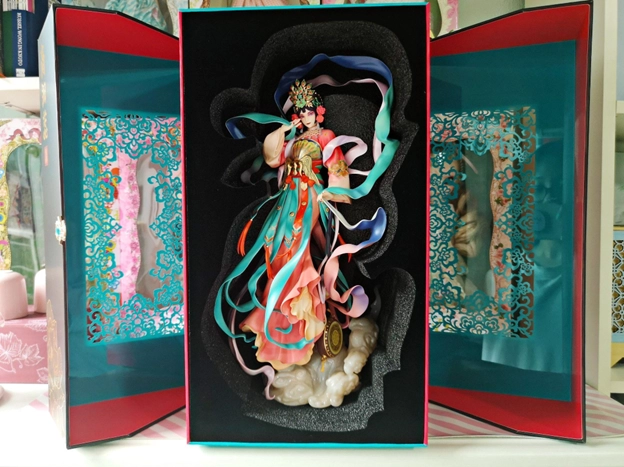
My figure of Shang Xirui in his Zhao Feiyan costume from Winter Begonia
¹ Garrad, JF (2019). Interview with Director Leon Le. Rice Paper Mag. https://ricepapermagazine.ca/2019/08/interview-with-director-leon-le/
² Lukman, Josa (2020). ‘Lengger’: Cultural and gender identities in the Indonesian tradition. The Jakarta Post. https://www.thejakartapost.com/life/2020/06/19/lengger-cultural-and-gender-identities-in-the-indonesian-tradition.html
³ Morrisy, Kim (2021). “Director Masaaki Yuasa Wants INU-OH To Be a Positive Story About Disability”. Anime News Network. https://www.animenewsnetwork.com/interest/2021-11-04/director-masaaki-yuasa-wants-inu-oh-to-be-a-positive-story-about-disability/.179180
⁴ Merican, Sara. (2025). “Oscars: Japan Picks Box Office Hit ‘Kokuho’ As 2026 Best International Feature Entry”. Deadline. https://deadline.com/2025/08/oscars-japan-kokuho-box-office-hit-best-international-feature-1236499786/
⁵ Bari, Prachi. (2025). “Cannes 2025 (Directors’ Fortnight): Kokuho | Interview with Sang-il Lee”. Film Fest Report. https://film-fest-report.com/cannes-2025-directors-fortnight-kokuho-interview-with-dir-sang-il-lee/
About the Author
Natalie is the Senior Engagement Executive at Asian Film Archive, our partner for Perspectives 2025. She writes, interviews and edits for the Asian cinema website Filmed in Ether and has an interest in women filmmakers and queer cinema.