

“You came here to die.”
Xan’s threat to Antoine in The Beasts (2022) distils director Rodrigo Sorogoyen’s searing examination of the collision between tradition and modernity. The native Galician farmer, Xan, resents the presence of Antoine, a French outsider who has moved into the village with his wife to pursue a self-sufficient rural life. The line, delivered with chilling certainty, echoes through the hills of Galicia like an omen. It captures the moral and emotional stakes of a conflict that is at once intimate and allegorical.
In this story of a French couple who moves to rural Spain seeking an “authentic” life, Sorogoyen explores how modern ideals, when imposed upon traditional communities, can reproduce the very forms of exclusion and violence they claim to transcend. Through the landscape’s hostility and the characters’ moral blindness, The Beasts questions whether progress is possible without empathy, and whether modernity can exist without domination.
Set in Galicia, a region long defined by its rugged terrain and economic marginalisation, the film unfolds within what Spaniards have come to call la España vaciada, also known as “the emptied Spain”. This phrase, now part of the national conversation, refers to depopulated rural areas left behind by urbanisation and the promise of European modernity.
Sorogoyen situates his story in this emptied space, where time seems to have slowed but resentment festers. The villagers’ lives are shaped by inheritance, hard labour, and the unforgiving soil. When Antoine and Olga arrive to farm organically and oppose a proposed wind turbine project, they ignite a conflict that exposes deep fractures in Spanish identity. More than just renewable energy, the wind turbine project embodies a familiar paradox. For the locals, it is a rare opportunity to profit from change, a chance to escape stagnation. For the outsiders, it is a betrayal of nature and idealism. This tension—between survival and principle, need and ethics—forms the film’s moral core.
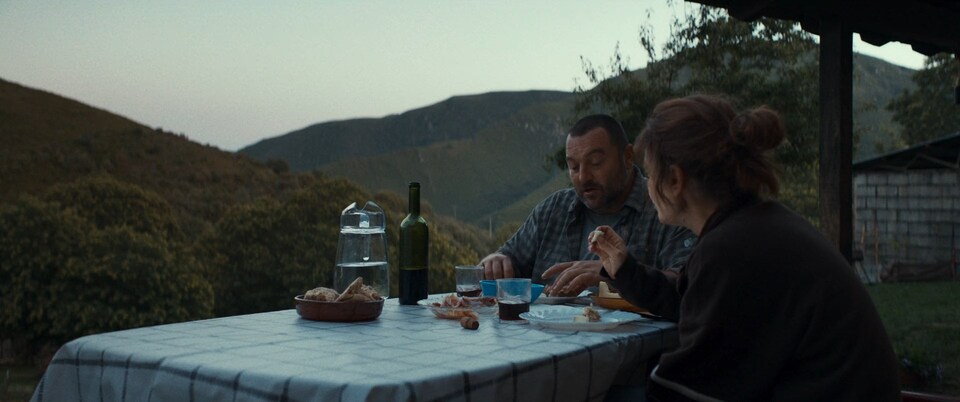
Antoine and Olga see themselves as progressive, coming to Galicia to live in harmony with the land, embracing sustainability and simplicity. Yet Sorogoyen’s film subtly critiques their colonial attitude. They seek “authentic” rural life but impose their own foreign values on a community with its own rhythms and history.
In trying to preserve the village from industrial development, they inadvertently disrupt its fragile equilibrium. What they perceive as ethical stewardship is, for the villagers, a denial of agency. Sorogoyen blurs the moral lines by suggesting that modernity can be as oppressive as the forces it resists when it refuses to understand or coexist with tradition. The couple’s moral superiority becomes another form of power, alluding to the way urban Europe often romanticises the rural periphery while misunderstanding its realities. The Beasts becomes not just a story of personal conflict, but an allegory of cultural colonialism within contemporary Europe.
Antoine’s intellectual rationality and Xan’s instinctive aggression represent two incompatible moral languages. With his trust in procedure, reason, and justice, Antoine films his neighbours’ provocations, appeals to authorities, and insists on dialogue. On the other hand, Xan and his brother Lorenzo operate within a system of pride, honour, and territorial defence. Antoine’s actions, to them, are not civil but insulting, violating the unspoken codes of their world. Sorogoyen stages these interactions with escalating unease, turning every conversation into a duel of values.
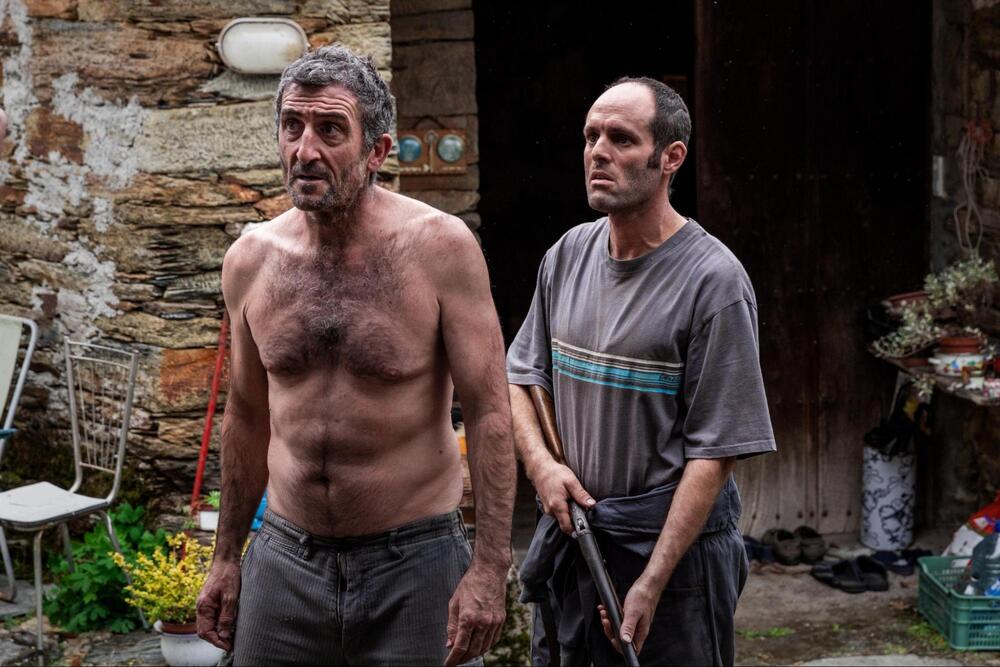
These exchanges recall Spain’s long history of internal divisions between the cosmopolitan and the provincial, the reformist and the conservative, the European and the deeply local. The Beasts thus becomes a microcosm of Spain’s broader struggle to reconcile its rural traditions with its place in a modern, globalised Europe. The land itself mirrors this tension. Sorogoyen’s Galicia is a living, breathing presence, alternately serene and suffocating. The camera lingers on misty hills, dense forests, and narrow paths that seem to swallow sound. This landscape is not a passive setting but an active force that shapes and contains its inhabitants. It resists cultivation, reflecting the intractability of human conflict.
Like the best works of Spanish rural cinema—Los santos inocentes (1984) by Mario Camus or The Spirit of the Beehive (1973) by Víctor Erice—The Beasts uses the countryside to explore social and moral isolation. The natural world in Sorogoyen’s film is both sanctuary and trap, embodying the contradiction of tradition itself: grounding and confining at once.
Sorogoyen’s broader intention extends beyond the personal. The Beasts reflects a Spain caught between its past and its future, between the memory of agrarian struggle and the aspirations of a European democracy. The dispute surrounding the wind turbine project mirrors ongoing national debates about who controls land, how rural spaces are used, and whose voices are heard in the story of progress.
By choosing Galicia, a region that often feels culturally peripheral, Sorogoyen amplifies voices seldom seen in Spanish cinema. His realist aesthetic, with its long takes and moral ambiguity, situates him among directors who probe the ethical cracks in contemporary life, such as Carlos Saura and Icíar Bollaín. Through his lens, modernity appears not as a linear ascent but as a negotiation with what it displaces.
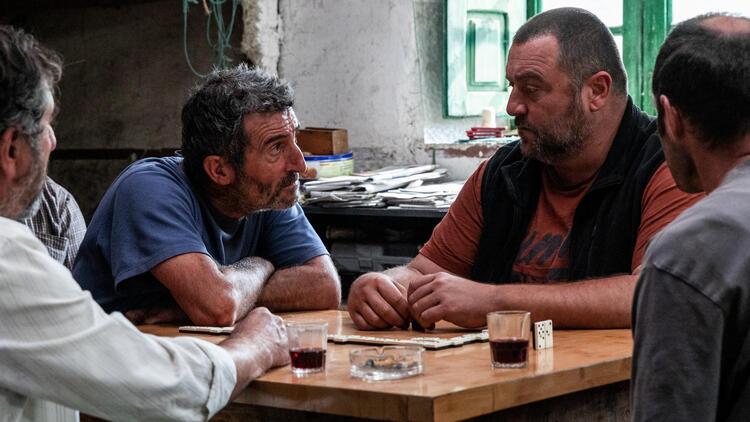
Sorogoyen refuses catharsis. The Beasts ultimately resists clear moral division. It is not a film about heroes and villains, but about misunderstanding. Both sides are right in their own way, and both are blind. Antoine’s belief in ethical progress collapses under the weight of pride and fear, while Xan’s sense of honour corrodes into violence. Between them lies a silence that neither can cross. His conclusion is not one of reconciliation but endurance, embodied in Olga’s steadfast presence.
“You came here to die” thus becomes more than a threat. It is a prophecy of what happens when modernity fails to see itself as part of the traditions it confronts. Through this story of suspicion, pride, and loss, The Beasts reveals that the struggle between tradition and modernity is not a question of progress but of understanding. That both worlds—the old and the new—need each other to survive, yet neither knows how to coexist. Sorogoyen’s film reminds us that empathy, not ideology, is the only path forward.
About the Author
Janelle is the Editorial head of Perspectives 2025. As a Communications Studies undergraduate at NTU, her area of interest lies in journalism and film production.