
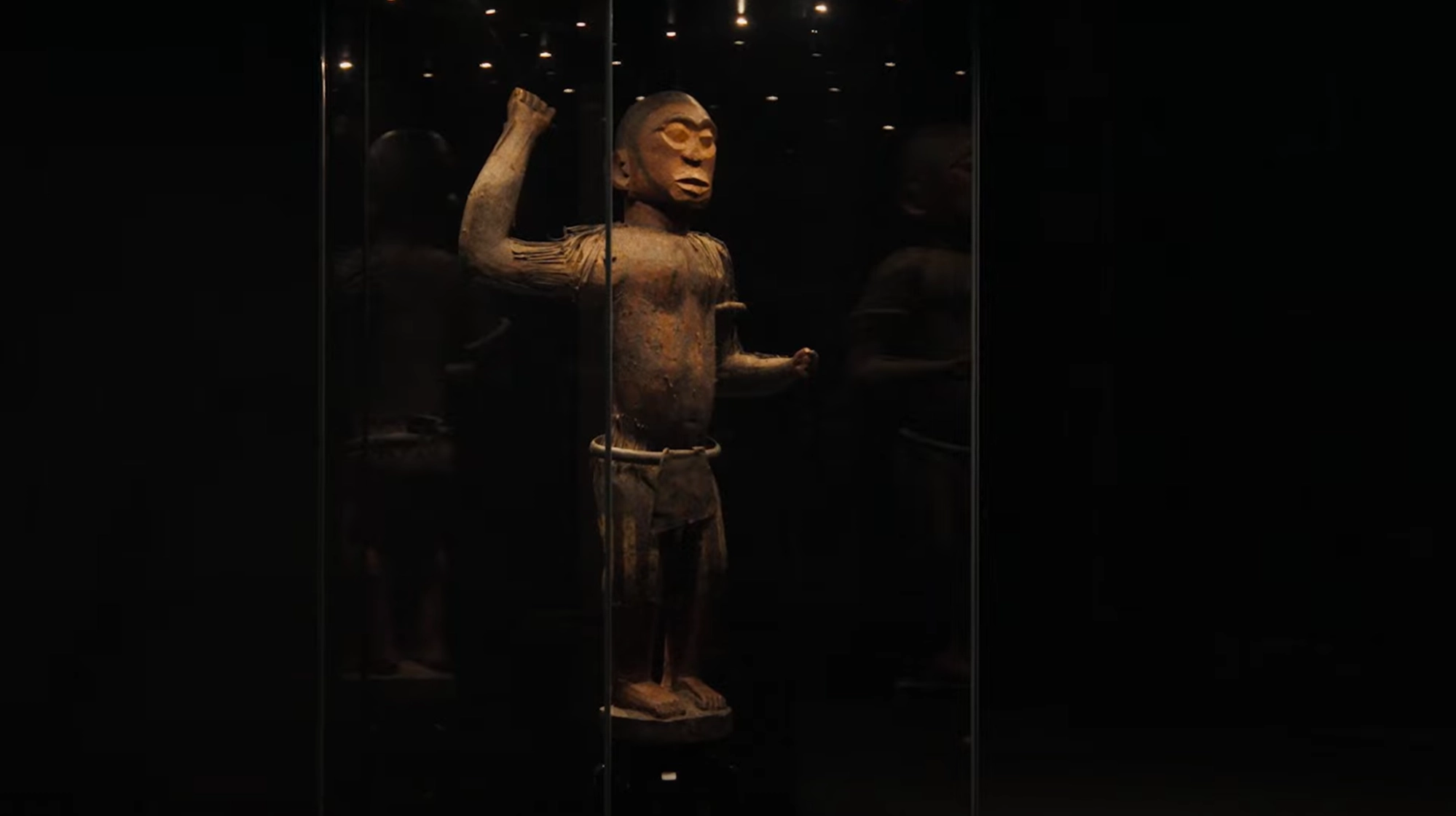
A disembodied voice beckons from the dark, bellowing from the depths. It laments, “There has never been a night so deep and opaque. Here, it is the only possible reality.” The omniscient voice belongs to “26”, one of thousands of artifacts wasting away in the basement of modern civilisation, chosen by sheer coincidence as one of the 26 royal treasures from the Kingdom of Dahomey that is to be returned to modern-day Benin. The film takes its title from the formidable kingdom with a 300-year history that existed on the Atlantic coast of Benin until 1894, but it begins without pomp and circumstance. Rather, it is through the pristine and parallel corridors of the Musée du quai Branly and behind glass enclosures where we are introduced to these artifacts.
Director Mati Diop takes on a cold and measured gaze in these initial sequences, one whose neutrality gives agency to the all-knowing voice — which belongs to the Haitian author Makenzy Orcel who wrote his own lines for the film, later translated into the Fon language — but also plunges viewers into the suspended virtues of these artifacts, trapped on hostile soil and in a vacuum of observation that denies them of their rich cultural history. The disembodied voice matched with the ethereal ambience of the soundtrack gives the film the quality of a haunting, a metaphor for the ghosts of colonialism and the long shadows it casts on the history of the world. While cinema has often played a vital role in stabilising the stories of empire, telling its stories through the colonial and hegemonic gaze, it has also served as the remedy to such Eurocentrism. Through putting marginal subjects at the centre of their own stories, transforming objects into subjects themselves through the gift of voice, Diop shines new light on the traumas of the colonial past and challenges the dominant representation of the Afro-diaspora.
While Diop remains a neutral observer, what she details in her observations, such as the initial namelessness of the statues themselves, reveals these latent colonial tendencies. It is only when the artifacts arrive back in Benin that they are privileged with their long-lost names and recover their rich history and cultural footprint. Once merely ambiguous objects of intrigue, they are now again sacred and powerful pieces of art. A quiet moment between a white-coated worker at the Beninese museum whispering to the statue of King Behanzin, represented as a shark, as if in prayer, encapsulates this mood of spiritual reconnection and healing which this journey across the sea seems to symbolise.
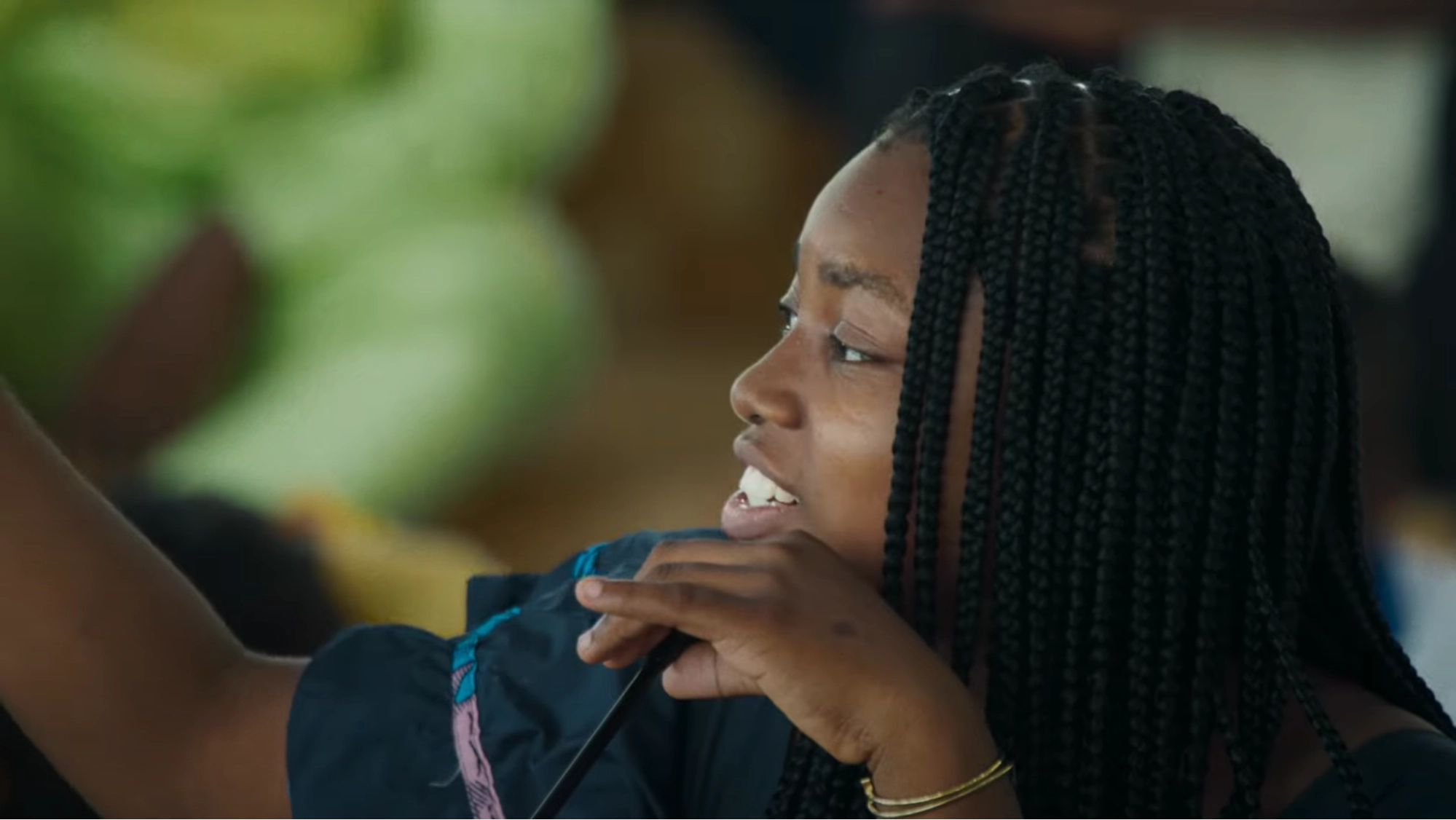
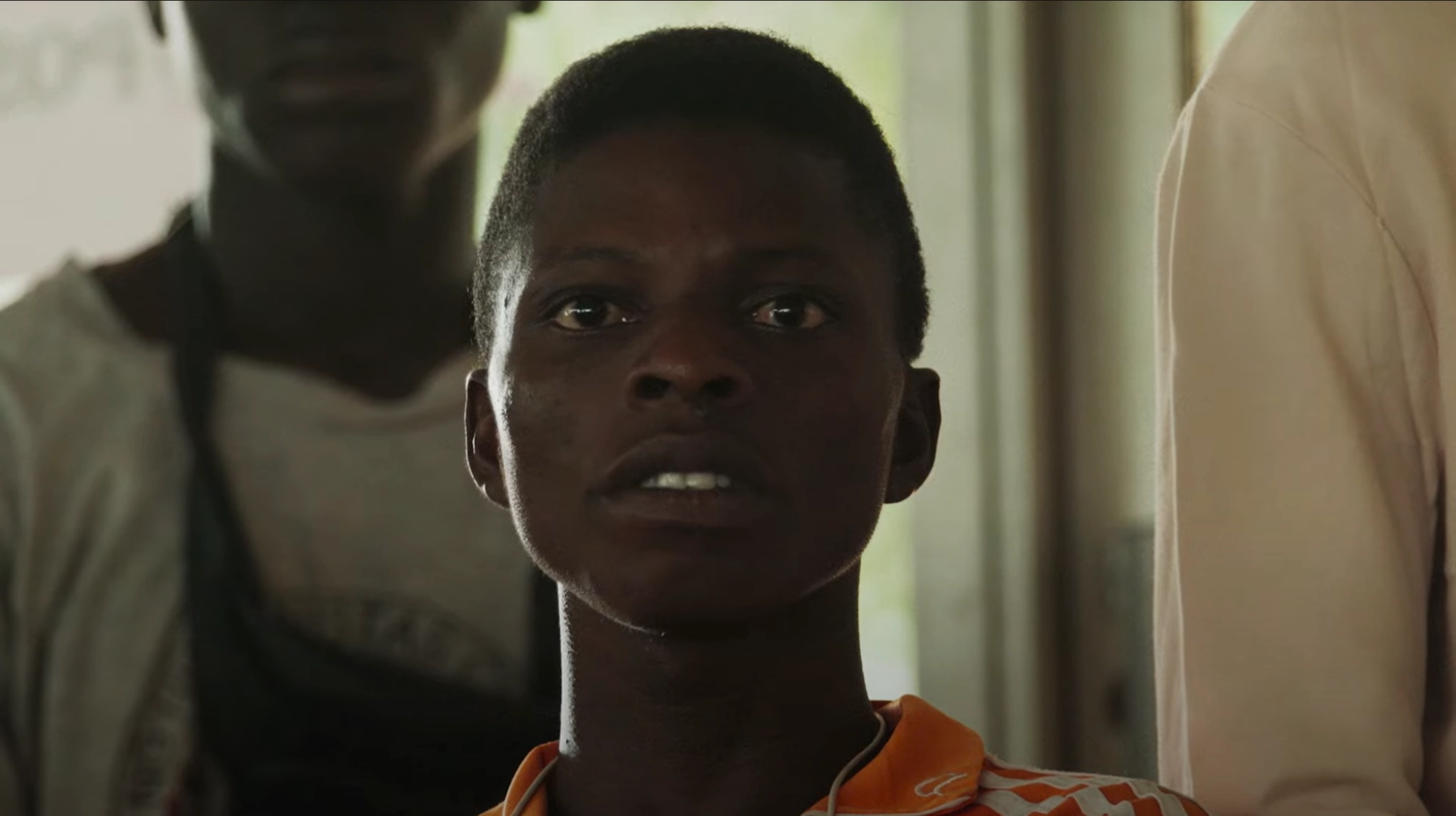
When the artifacts arrive in Benin, they are met with celebrations, lifting the film’s sombre spirit through a vibrant injection of song and dance, as it sets up the raucous atmosphere that would mark the second act, which features college campus debates surrounding the returned treasures of Dahomey. It is in this second half where Diop’s poetic, hybrid documentary feels rejuvenated, as if reimbued with youthful vigour as scenes unfold with spontaneous authenticity and impassioned students voice contrasting views on the issues of this derisory act of restitution. There is something wildly refreshing about how outwardly confrontational this forum is. Again, there is some kind of communion with the past as their symphony of voices echo the weariness and anger of the statues. Diop observes the scene objectively but lovingly as she provides a platform for the myriad voices of the Beninese youth to be heard. Through the unanswered worries of the youth, Dahomey observes how the tradition and the modern collide as citizens deal with the ghosts of colonialism in the present. The dialogue serves as a communion between the spectre of the past and the bodies that continue to persist in their fight against the dominant hegemony.
Throughout Dahomey, Diop is careful to avoid not just the colonial perspective, but also the political national narrative from the Benin state as it situates its perspective away from the African political apparatus. Rather, Diop privileges subaltern voices, like those of the statues themselves, but also by extension, the unheard voices and actions of the workers who contribute the labour for the return of these royal treasures, and the Beninese youths who are rarely asked of their opinions, nor provided with the necessary platform. Diop, who is of French-Senegalese descent, carefully navigates a Beninese culture which she remains an outsider to, but it is also this outsider perspective that allows for a film which straddles the line between celebratory and critical.
Dahomey offers no recourse, but instead offers new perspectives through an array of marginal voices. Knowledge constructs what it purports to know, and Diop’s film offers an alternate history which provides viewers a more nuanced view of the world, one which challenges the hegemonic image provided by the colonial apparatus and attempts to begin the journey of spiritual reconnection and healing – one that must be undertaken between the enduring, generational estrangement of the past and of the populace.
About the Author
Adrian is a member of the Programmes team for Perspectives 2025. He is an aspiring filmmaker and film critic, studying English Literature at NTU.